 Whatsapp: +86 13584829534



Search for more information


Solder paste shelf life depends heavily on storage temperature, flux chemistry, alloy composition, and packaging conditions. For SMT manufacturers, choosing between refrigerated and room temperature storage directly affects material stability, printing consistency, and inventory management.
While refrigeration is generally recommended for long-term storage, some solder paste formulations allow limited room temperature storage without significant performance loss. Understanding the difference helps manufacturers reduce material waste and maintain consistent soldering quality.
Solder paste manufacturers specify different shelf lives depending on formulation and storage temperature. Refrigerated storage generally extends usable storage life by slowing chemical reactions between the flux system and solder powder.
Typical industry reference conditions include:
| Storage Condition | Typical Storage Temperature | Reference Shelf Life |
|---|---|---|
| Refrigerated | 0–10°C | 6 months or longer, depending on formulation |
| Controlled room temperature | 19–25°C | Several weeks to 3–6 months for certain formulations |
| Elevated temperature | Above 25–30°C | Accelerated degradation risk; product-specific limits apply |
These figures are industry examples, not universal guarantees. For example, Indium specifies a six-month refrigerated shelf life below 10°C for certain solder paste products. AIM also reports typical room temperature shelf lives of 3–6 months for its formulations, while Kester products may have much shorter room temperature allowances depending on the specific product.
Always check the manufacturer's Technical Data Sheet (TDS) for the exact storage period, temperature limits, and expiration date.
The main difference between these two storage methods is how temperature affects the chemical and physical stability of solder paste.
Refrigerated storage is the preferred method for maintaining solder paste quality over an extended period.
At lower temperatures, chemical reactions between flux activators and solder alloy particles slow down. This helps reduce premature oxidation-related reactions, particle agglomeration, and changes in paste rheology.
Key advantages include:
Extended shelf life: Many solder paste formulations offer approximately six months of refrigerated shelf life, with some products allowing longer periods.
Improved material stability: Lower temperatures slow down degradation mechanisms within the flux system.
Consistent printing performance: Proper storage helps preserve viscosity, tackiness, and print transfer characteristics.
Better inventory control: Refrigerated storage supports batch management and FIFO rotation.
For long-term SMT material management, controlled refrigeration is generally the more reliable option.
Room temperature storage offers greater flexibility when solder paste is being prepared for production or when the manufacturer explicitly permits ambient storage.
However, the allowable storage period varies significantly between formulations.
Potential limitations include:
Faster chemical aging compared with refrigerated storage.
Increased risk of viscosity changes under elevated temperatures.
Shorter allowable storage periods for certain formulations.
Greater sensitivity to uncontrolled warehouse temperatures.
Some solder pastes can maintain their specified performance for several weeks or months at controlled room temperature, but this should never be assumed for every product.
For example, certain Kester NP560 formulations permit up to four weeks at room temperature, while other products have different limits.
Solder paste consists primarily of solder alloy powder suspended in a flux vehicle containing activators and other functional ingredients.
During storage, the flux system can gradually interact with solder powder surfaces. Temperature influences the rate of these chemical reactions.
Three important changes can occur:
1. Changes in Viscosity
As the paste ages, chemical interactions and physical changes can affect its rheological properties. Increased viscosity may reduce print transfer efficiency and make it difficult to fill fine stencil apertures.
2. Solder Powder Agglomeration
Interactions between flux activators and solder particle surfaces can contribute to particle bonding or agglomeration. This may result in poor printing behavior, blocked stencil openings, and inconsistent solder deposits.
3. Changes in Flux Performance
Flux activity and chemical stability can change over time, potentially affecting oxide removal, wetting behavior, and solder joint formation during reflow.
These changes generally develop gradually rather than occurring immediately when a specific temperature is reached. However, higher storage temperatures can accelerate degradation.
Yes, solder paste can be removed from refrigeration for production use, provided the manufacturer's handling instructions are followed.
However, removing solder paste from refrigeration does not mean it can be left at room temperature indefinitely.
A controlled handling process should include:
Check the expiration date and batch information before removal.
Record the date and time when the solder paste leaves refrigerated storage.
Keep the container sealed during temperature recovery.
Allow the paste to reach the recommended working temperature naturally.
Open the container only after thermal equilibration.
Follow the manufacturer's instructions regarding stirring, usage time, and post-opening storage.
Repeated temperature cycling should be minimized because the cumulative effect of different temperature exposures on remaining shelf life is difficult to predict.
If unopened solder paste must be returned to refrigeration, follow the specific manufacturer's instructions and maintain an accurate exposure history.
Opening refrigerated solder paste immediately after removal can introduce a condensation risk.
When a cold container is exposed to warmer ambient air, moisture can condense on the container and potentially enter the paste when it is opened.
Excess moisture can affect flux chemistry, printing behavior, and soldering quality.
To prevent this problem:
Keep the container sealed during temperature recovery.
Allow natural warming rather than using external heating.
Follow the manufacturer's specified recovery time.
Verify that the material has reached the recommended working temperature before opening.
For example, Kester recommends approximately 3–4 hours of natural temperature recovery for its general solder paste handling procedure, while certain Indium product data sheets recommend at least two hours. Actual recovery time depends on container size and initial temperature.
Managing solder paste shelf life requires more than maintaining a low storage temperature. Manufacturers also need accurate inventory records, controlled material movement, and standardized handling procedures.
The following practices help reduce material degradation and unnecessary waste:
| Management Practice | Purpose |
|---|---|
| Refrigerated storage | Maintain the recommended storage temperature |
| FIFO management | Prioritize older batches before newer inventory |
| Temperature monitoring | Identify abnormal temperature fluctuations |
| Batch tracking | Record manufacturing dates and expiration dates |
| Temperature recovery control | Prevent premature opening and condensation |
| Usage records | Monitor removal times and material consumption |
| Alarm management | Identify abnormal storage conditions promptly |
For factories managing multiple solder paste types and production orders, manual recording can make it difficult to maintain accurate material histories.
An intelligent storage system can automate several of these operations and improve consistency across the production process.
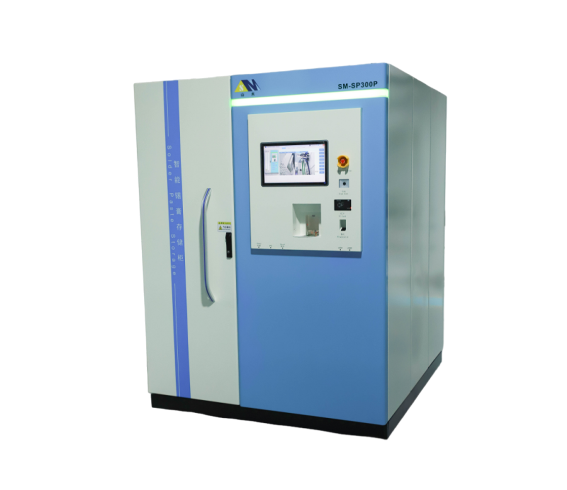
An intelligent solder paste storage cabinet provides controlled refrigeration and automated material management for SMT production environments.
SunMoon's Intelligent Solder Paste Storage Cabinets integrate refrigeration, temperature recovery, automatic stirring, FIFO management, MES connectivity, and full-process traceability.
Key capabilities include:
Controlled Refrigeration: Maintains a refrigeration temperature of 1–10°C with ±1.0°C temperature tolerance on the SM-SE200P.
Temperature Monitoring: Provides real-time digital temperature readings, temperature curve displays, and over-temperature alarms.
Automatic Temperature Recovery: Supports automatic, scheduled, and MES-based temperature recovery, with an adjustable recovery temperature of 18–28°C.
FIFO Management: Automatically manages solder paste dispensing according to feeding time or production date.
Automatic Stirring: Supports configurable stirring parameters after temperature recovery.
MES Integration: Enables real-time data interaction with factory management systems.
Material Traceability: Records solder paste information throughout storage and dispensing processes.
With storage capacities of 200, 300, and 600 bottles across the SM-SE200P, SM-SP300P, and SM-SP600P models, SunMoon provides different storage configurations for SMT manufacturers.
These functions help reduce manual handling errors, improve storage consistency, and maintain more accurate control over solder paste inventory and usage history.
Refrigerated storage generally provides better long-term protection for solder paste than room temperature storage, although the exact shelf life depends on the formulation and manufacturer's specifications.
For SMT manufacturers, the key is to combine appropriate refrigeration temperatures with accurate batch tracking, controlled temperature recovery, and FIFO inventory management.
An intelligent solder paste storage cabinet helps integrate these processes into a standardized system, supporting material stability and more consistent SMT production management.
If you have any questions or need help, feel free to contact with our team.
Room 503, Building 7, NianDongUValleyScience Park, No. 63 Weixin Road, SuzhouCity, Jiangsu Province
Copyright © 2025 Suzhou SunMoon Intelligent Technology Co., Ltd All Rights Reserved. | Sitemap


 +86 13584829534
 +86 13584829534