 Whatsapp: +86 13584829534



Search for more information


Solder paste viscosity is critical to stable SMT printing. If the paste becomes too thick or too fluid, stencil transfer, deposit shape and solder volume can all become inconsistent. One of the most common causes of viscosity change is improper storage temperature.
Solder paste is a mixture of metal powder, flux, solvents and rheological additives. Its physical properties are highly temperature-sensitive.
When solder paste is too cold, its viscosity increases. If it is placed on the stencil before reaching the recommended working temperature, it may not roll or release through stencil apertures properly. This can cause insufficient deposits and inconsistent printing.
High temperatures create a different problem. Long exposure to heat can accelerate flux reactions, oxidation and solvent loss, gradually changing the paste's rheological properties and reducing its usable storage life.
Unstable solder paste viscosity can lead to:
● Poor stencil release
● Uneven solder paste deposits
● Insufficient or excessive solder volume
● Slumping or bridging
● Solder balls
● Poor wetting during reflow
● Higher SMT defect and rework rates
This is why solder paste should not simply be stored in an uncontrolled warehouse or ordinary production environment.
Correct refrigeration is only part of solder paste management.
After refrigerated paste is removed from storage, it normally needs sufficient time to reach the recommended working temperature before opening. Opening a cold container in a warmer environment may create condensation, which can negatively affect solder paste performance.
Factories therefore need to manage both refrigerated storage and temperature recovery, rather than only checking whether the paste has been kept cold.
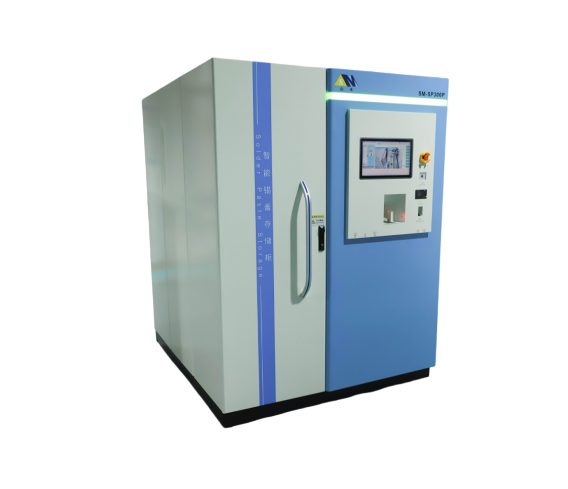
A dedicated solder paste storage cabinet helps manufacturers control solder paste more consistently throughout storage and preparation.
Compared with simple refrigerated storage, an intelligent system can integrate functions such as refrigeration, controlled temperature recovery, stirring, FIFO management and material traceability. SunMoon's intelligent solder paste storage systems, for example, are designed with these functions for standardized solder paste management.
This is especially useful for SMT factories handling multiple solder paste batches or operating high-volume production lines where manual storage records can easily create mistakes.
Wrong storage temperature does more than shorten solder paste shelf life—it can change viscosity and directly affect printing consistency.
Maintaining controlled refrigeration, allowing proper temperature recovery before use, and managing solder paste according to FIFO principles can help reduce process variation. For factories that require more reliable material control, an intelligent solder paste storage cabinet provides a more systematic way to manage solder paste from storage to production.
If you have any questions or need help, feel free to contact with our team.
Room 503, Building 7, NianDongUValleyScience Park, No. 63 Weixin Road, SuzhouCity, Jiangsu Province
Copyright © 2025 Suzhou SunMoon Intelligent Technology Co., Ltd All Rights Reserved. | Sitemap


 +86 13584829534
 +86 13584829534