


 Whatsapp: +86 13584829534




Automotive Electronics Manufacturing Challenges
Automotive electronics manufacturing requires extremely high stability, traceability, and process control. However, many factories face the following challenges:
Inconsistent solder paste quality due to unstable storage and temperature control
Lack of full material traceability across production processes
Inefficient manual labeling and coding operations
Poor integration between production equipment and MES systems
High defect risk in PCB soldering and assembly processes
These issues directly affect product reliability and compliance with IATF 16949 automotive quality standards.
Pain Points to Address:
· Inconsistent manual temperature control during storage leading to solder paste oxidation and flux separation;
· Difficulty in batch traceability of solder paste, hindering "first-in-first-out" management;
· Disconnection between storage processes and MES data, making full production traceability impossible.
Industry Pain Points:
· Automotive PCB (e.g., sensors, central control modules) require stringent solder paste quality. Manual temperature control inconsistencies cause soldering defects and fail to meet IATF 16949 traceability standards;
· Solder paste printers are highly sensitive to workshop temperature/humidity, prone to bridging/cold joints, compromising automotive electronics safety;
· Automotive components require labeling (specs/batches) and marking (traceability codes), but manual operations are inefficient/error-prone, incompatible with high-speed production lines.
Matching Core Products:
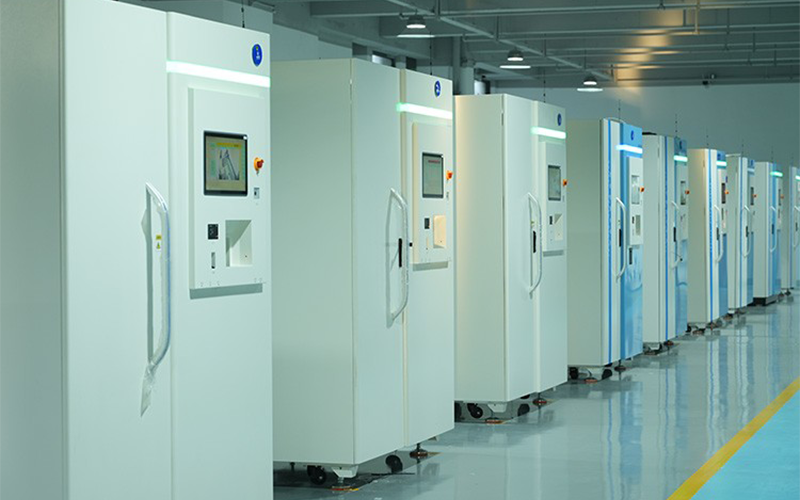
· Intelligent Solder Paste Storage Cabinet + Constant Temperature/Humidity Control Machine + Fully Automated Non-Contact Online Inkjet Printer Machine + Fully Automated Online Labeling Machine
Solutions:
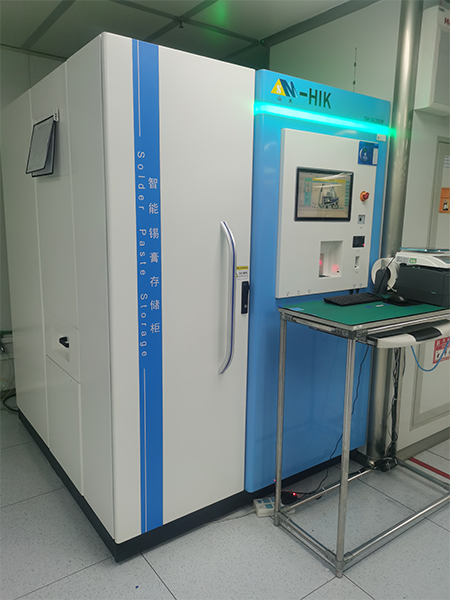
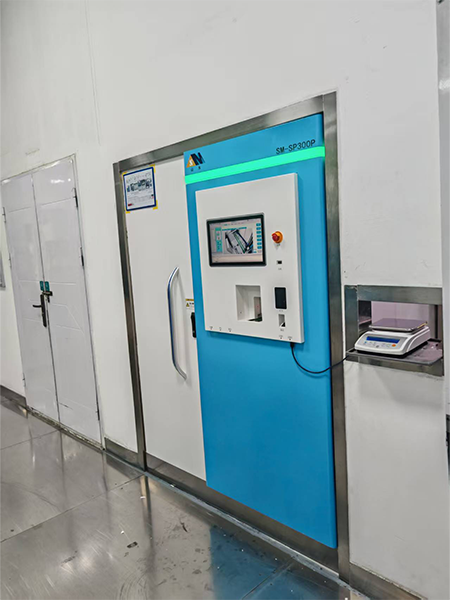
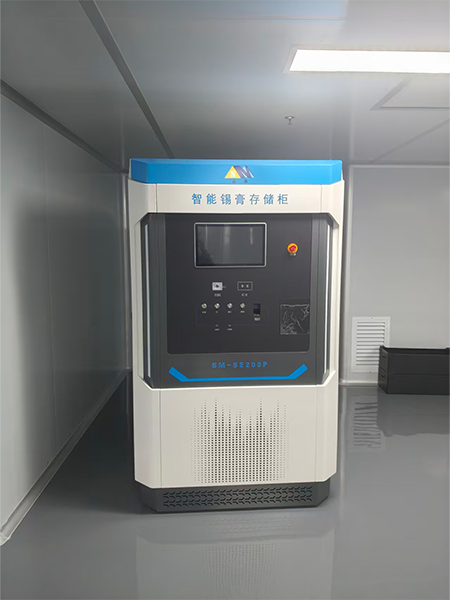
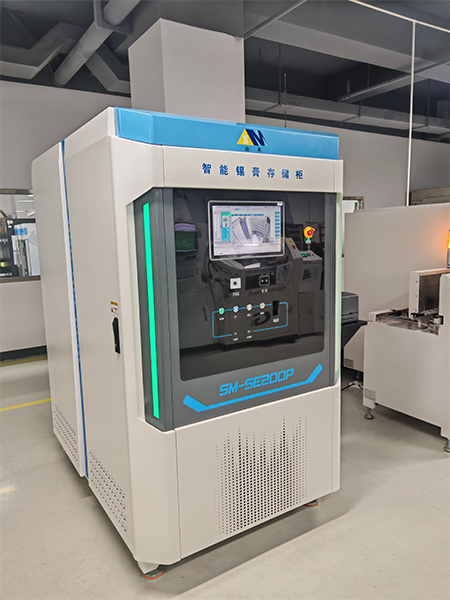
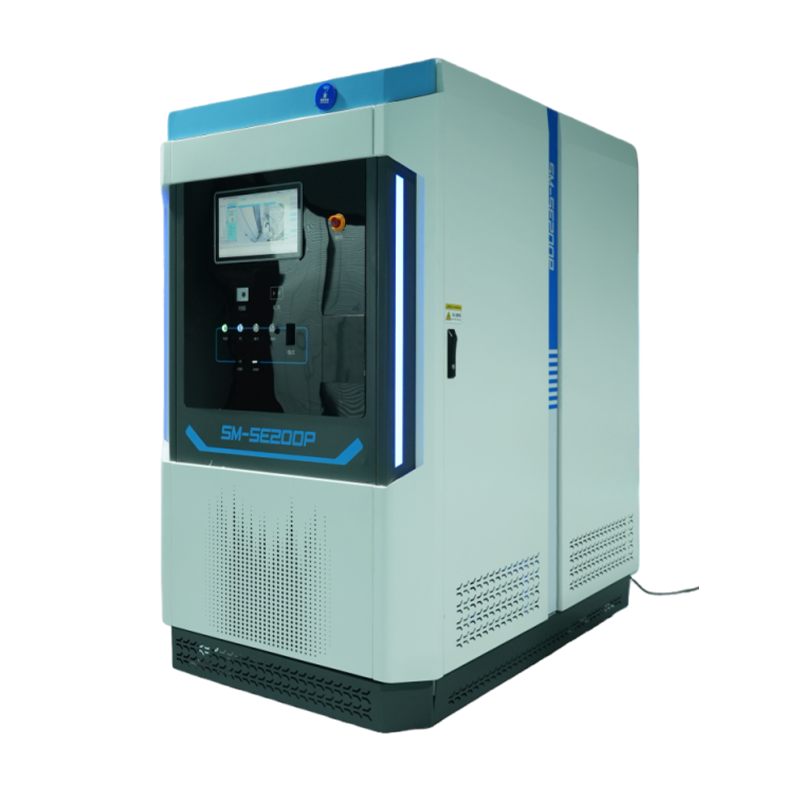
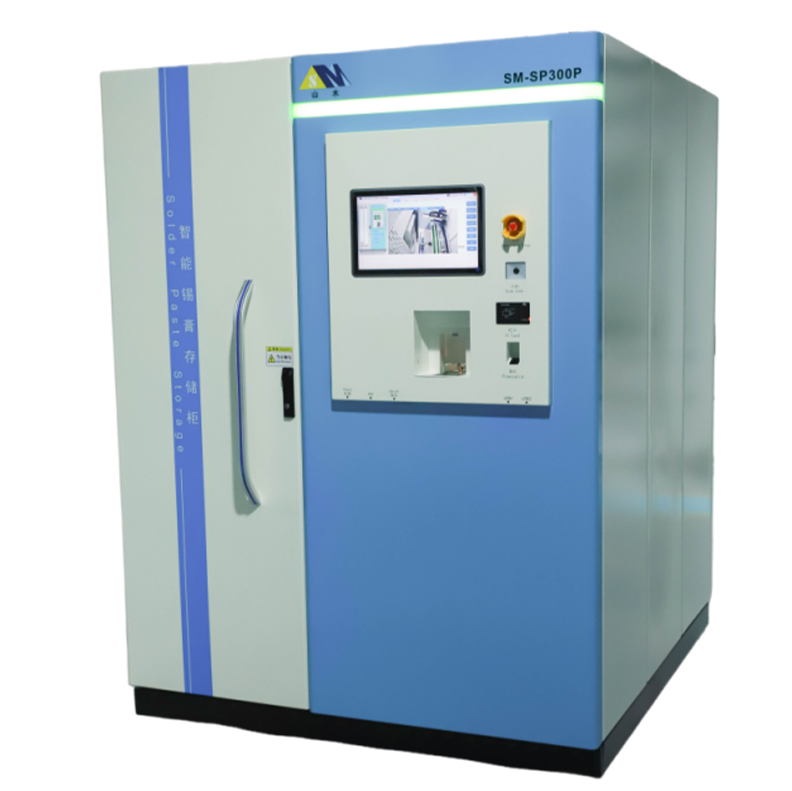
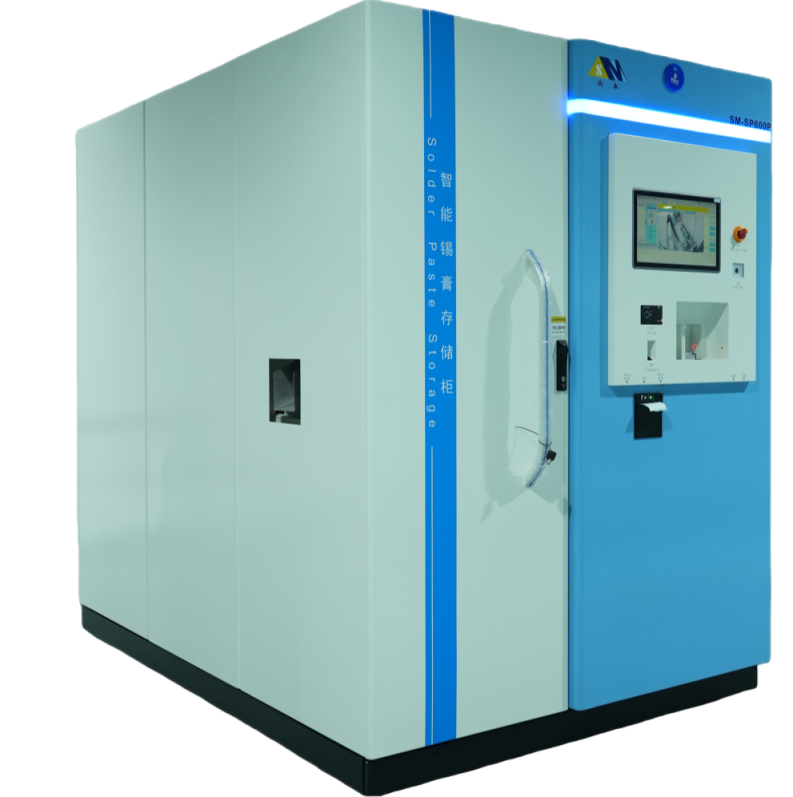
1. The solder paste storage cabinet ensures stable material quality before production.
Key functions:
200–600 bottle capacity options for high-volume production
Refrigeration (1–10°C) and temperature recovery system (18–28°C)
Automatic stirring to maintain paste consistency
FIFO (First-In-First-Out) material management
MES integration for full traceability
Value:
Reduces manual handling errors and ensures consistent solder paste performance in automotive SMT lines.
 |  |
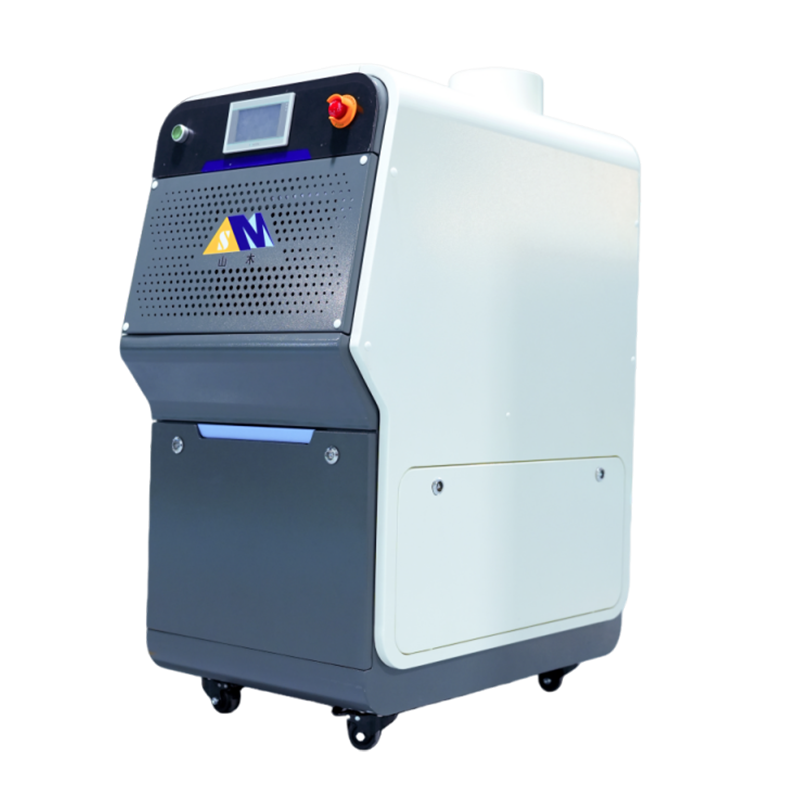
2. SMT Temperature & Humidity Control Machine
· Monitors and dynamically adjusts printing environment to eliminate "high-temperature collapse" or "low-temperature cold joints";
· Triple-color alarms + buzzer ensure stable PCB printing quality and reduce post-sale risks.
Pain Points Solved:
· Environmental fluctuations impair equipment (e.g., paste printers) accuracy and yield;
· Lack of real-time monitoring/alert mechanisms causes unexpected losses.
Advantages:
· Customized control (5–40°C ±0.5°C; 30–70% RH ±3%) for production equipment;
· Smart monitoring: Real-time displays + historical curves, with alarms for anomalies;
· MES compatibility: Data uploads support process optimization.
Applications:
· Designed for paste printers and pick-and-place machines in high-precision manufacturing.
 |  |
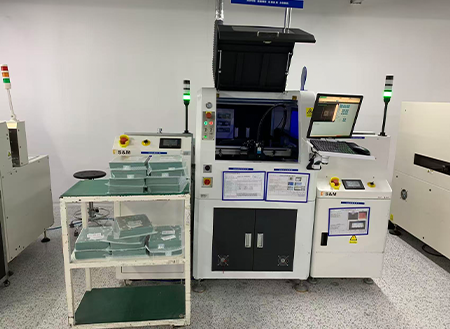
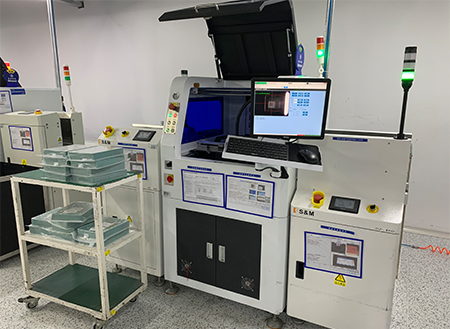
3. PCB Inkjet Marking Machine
· 1148 characters/sec speed suits 3000 units/hour automotive lines;
· CCD vision (±0.1mm) marks traceability codes on metal/plastic parts, syncing data to MES for audits.
Pain Points Solved:
· Manual labeling inefficiency (800–1200 units/hour) and errors (misalignment/omissions);
· Incompatibility with diverse packaging (PCBs/trays) and high-speed lines.
Advantages:
· High precision: CCD positioning (±0.02mm), 3000 units/hour, ≤0.1% error rate;
· Versatility: Supports 150–400mm labels for flat/curved surfaces;
· MES integration: Auto-scans and uploads barcode data for traceability.
Matching Rationale:
· Meets IATF 16949 requirements for marking batches/traceability codes on automotive components without damage.
Applications:
· High-speed SMT lines for PCB/SMD tray labeling.
 |  |
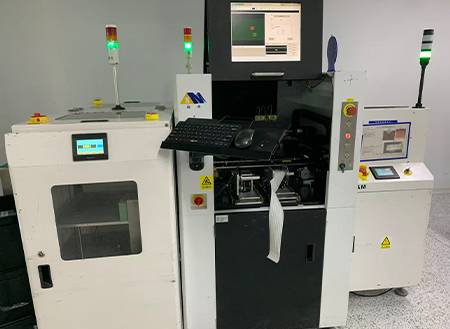
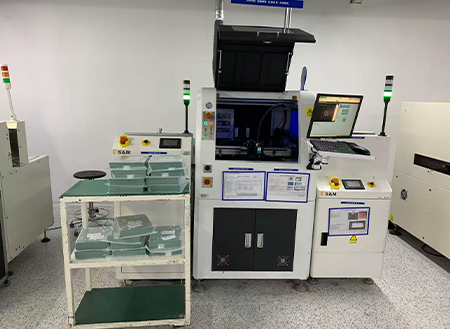
4. Fully Automated Online Labeling Machine (SM-TB904H)
· 4-head operation (0.8–1.2 sec/unit), dual feeders for specs/traceability labels;
· Soft nozzles (±0.05mm) prevent component damage, reducing rework.
Pain Points Solved:
· Contact marking damages delicate components and lags behind line speeds;
· Poor adhesion on plastic/metal surfaces blurs critical info (e.g., lot numbers).
Advantages:
· Non-contact CIJ technology (6 m/s) for plastic/metal/glass without damage;
· Durable marks: Industrial inks (including UV) resist friction/moisture/heat;
· MES sync: Auto-marks variable data (lots/expiry/barcodes) for traceability.
Applications:
· Coding for electronic components, PCBAs, and packaging in traceability-driven manufacturing.
 |  |
Core Value of SunMoon Solution
SunMoon smart manufacturing solution delivers measurable improvements for automotive electronics factories:
✔ 30–50% increase in production efficiency
✔ 20–40% reduction in defect rates
✔ Full MES-based traceability from material to final product
✔ Reduced manual intervention and operational errors
✔ Improved compliance with automotive industry standards (IATF 16949)
Next Steps
· Free Industry Diagnosis: Share your production line scale (e.g., 5 production lines) and biggest pain points to receive a customized solution;
· Case Studies: Access success stories from partnered clients in your industry (e.g., Sungrow Power Supply, Geely Auto);
· Equipment Demo: Schedule a live demo of smart solder paste storage cabinets, labelers, and other equipment to witness efficiency improvements firsthand.
Contact Us—Let’s transform your pain points into profit growth drivers.
Email: Amy_Li@sunmoonsz.com


 +86 13584829534
 +86 13584829534


